Introducing Glasswall Foresight: Predictive, AI-Powered Threat Intelligence for a Zero Trust World
The problem: noisy, outdated, expensive intelligence
Cyber threats evolve faster than security solutions can adapt. Traditional threat intelligence depends on known file signatures or behavioural detonation; both approaches are often outdated by the time they are deployed. As a result, many security teams find themselves reacting to zero-day and targeted attacks after damage has already occurred — or remain blind to the threats entering their environment.
We understand the pressure on security teams
Security professionals are under constant pressure to interpret alerts, manage unknown vulnerabilities, and maintain the integrity of critical files. Whether operating in an air-gapped defence network or a fast-moving enterprise environment, teams need structured, reliable insight that helps them prioritise risk, tune policies, and respond faster.
For more than a decade, Glasswall has worked alongside defence and intelligence agencies across the Five Eyes community and other highly secure government environments. At the core of that work is Content Disarm and Reconstruction (CDR) — a Zero Trust approach that deconstructs and rebuilds files to remove malware's ability to exist. In high-security environments, traditional sandboxing and detonation chambers introduce significant operational and financial overhead. They require complex infrastructure, consume compute resources, and often cannot operate in fully air-gapped or mission-critical networks where file ingestion must be both secure and immediate.
The evolution of actionable threat intelligence
Powered by proprietary machine learning models, Foresight delivers probabilistic threat scoring when deployed alongside CDR workflows, giving your team unmatched clarity, control, and confidence in file security.
Unlike internet-trained AI models or sandbox-based analysis, Glasswall Foresight derives its intelligence directly from the structural telemetry generated during the CDR process. This gives teams CDR-level threat intelligence, while preserving an original file's structure — making it ideal for situations where files must remain unaltered for compliance, legal, or evidentiary reasons. Operating fully offline, it works in air-gapped and DDIL scenarios where traditional antivirus tools struggle and mission safety is critical.
Glasswall Foresight: Redefining how unknown malware is stopped
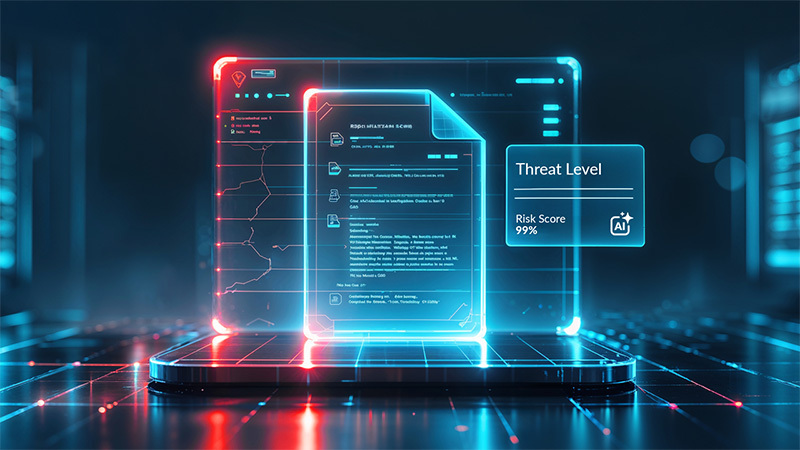
By assessing files and generating a probabilistic threat score, Foresight reflects the likelihood of malicious behaviour, including previously unseen or zero-day threats that evade signature-based and sandbox detection systems.
This score is applied alongside existing CDR policies, giving security teams structured, actionable threat signals and SIEM-ready data on potentially risky files within their environment.
Why Glasswall Foresight is a game changer
Detects what others miss — Identifies unknown and zero-day threats beyond the reach of antivirus and sandboxing tools.
Reduces alert fatigue — High accuracy and extremely low false positive rates (0.015% for PDFs) reduce false alarms and investigation time, while providing rapid, actionable threat signals to security teams.
Preserves file integrity — Provides protection without altering original file structure, ideal for compliance, legal, or evidentiary reasons.
Deploys anywhere, even offline — Works in the cloud, on premises, or air-gapped and DDIL environments via CLI, Docker, Python, or C++.
Provides cost savings — Helps reduce reliance on multiple antivirus filters and expensive detonation chambers.
How Glasswall Foresight works
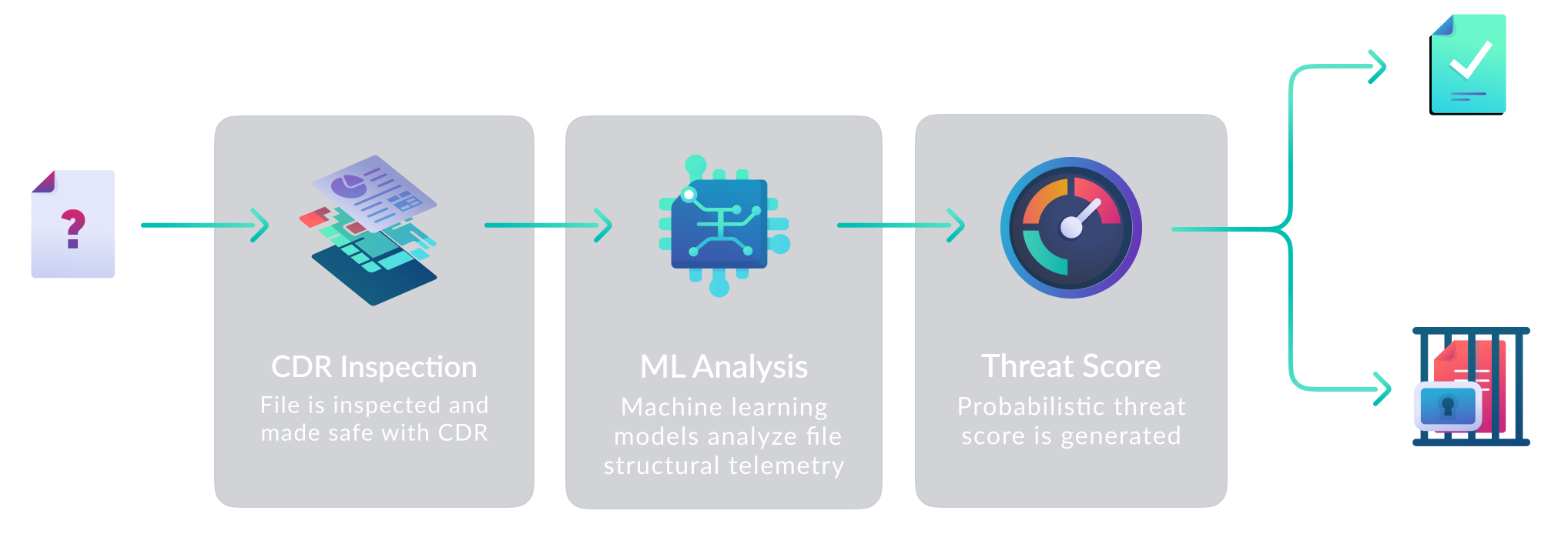
When a file is processed in Glasswall Meteor, Foresight performs a sequence of intelligent assessments:
Deep file analysis: Using machine learning and CDR-based inspection, Foresight analyses the internal structure and embedded characteristics of a file to produce a probabilistic threat score indicating the likelihood of malicious intent.
Policy-driven handling: Meteor applies your configured CDR policies alongside Foresight's risk score, enabling intelligent, policy-driven decisions without introducing detonation delays or additional infrastructure.
Currently, Foresight supports PDF, DOCX, and XLSX file formats.
What this means for you
Powered by AI and built on Glasswall's proven CDR technology, Foresight delivers predictive, file-native intelligence that helps security teams identify and prioritise file-based threats earlier in the attack lifecycle. It enables your organisation to move from reacting to attacks toward anticipating and managing risk proactively. By integrating predictive intelligence with CDR, Foresight supports early identification of sophisticated threats and helps teams strengthen their endpoint defence.
Discover how Glasswall Foresight delivers predictive, Zero Trust-aligned threat intelligence — wherever your files move.
Riyya Ahmed
Our Senior Technical Writer and Product Marketing Manager, Riyya, is exceptional at authoring, organizing, and simplifying our product documentation. Using her keen eye for detail and wealth of experience in tech, Riyya helps our clients and partners seamlessly integrate with industry-leading Zero Trust CDR.
See what Zero Trust file protection looks like. Live, in 25 minutes.
A tailored walkthrough of how Glasswall rebuilds files to a known-good state, removes hidden threats, and provides the intelligence you need to understand file risk.
What's in the demo
See malicious files rebuilt in real time Watch Glasswall remove hidden threats and return a safe, usable files.
Integrate security without disruption See how Glasswall fits into your existing workflows and infrastructure.
Gain complete visibility into file risk Uncover threats, anomalies and hidden file intelligence.
“
Beazley's security is paramount, and this integration has significantly reinforced our cybersecurity framework.
Thank you! Your submission has been received!
Oops! Something went wrong while submitting the form.

.png)