The problem: noisy, outdated, expensive intelligence
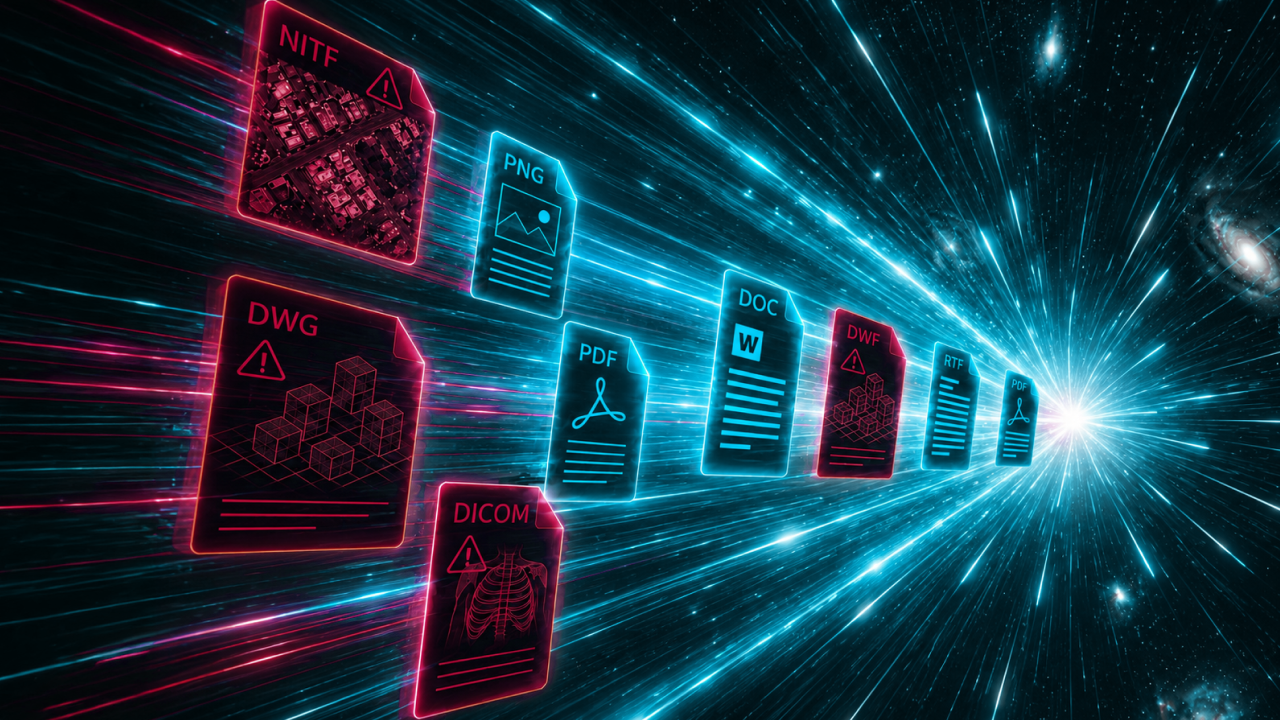
Cyber threats evolve faster than security solutions can adapt. Traditional threat intelligence depends on known file signatures or behavioral detonation; both approaches are often outdated by the time they are deployed. As a result, many security teams find themselves reacting to zero-day and targeted attacks after damage has already occurred, or remain blind to the threats entering their environment.
What security teams are up against
Security professionals are under constant pressure to interpret alerts, manage unknown vulnerabilities and maintain the integrity of critical files. Whether operating in an air-gapped defense network or a fast-moving enterprise environment, teams need structured, reliable insight that helps them prioritize risk, tune policies, and respond faster.
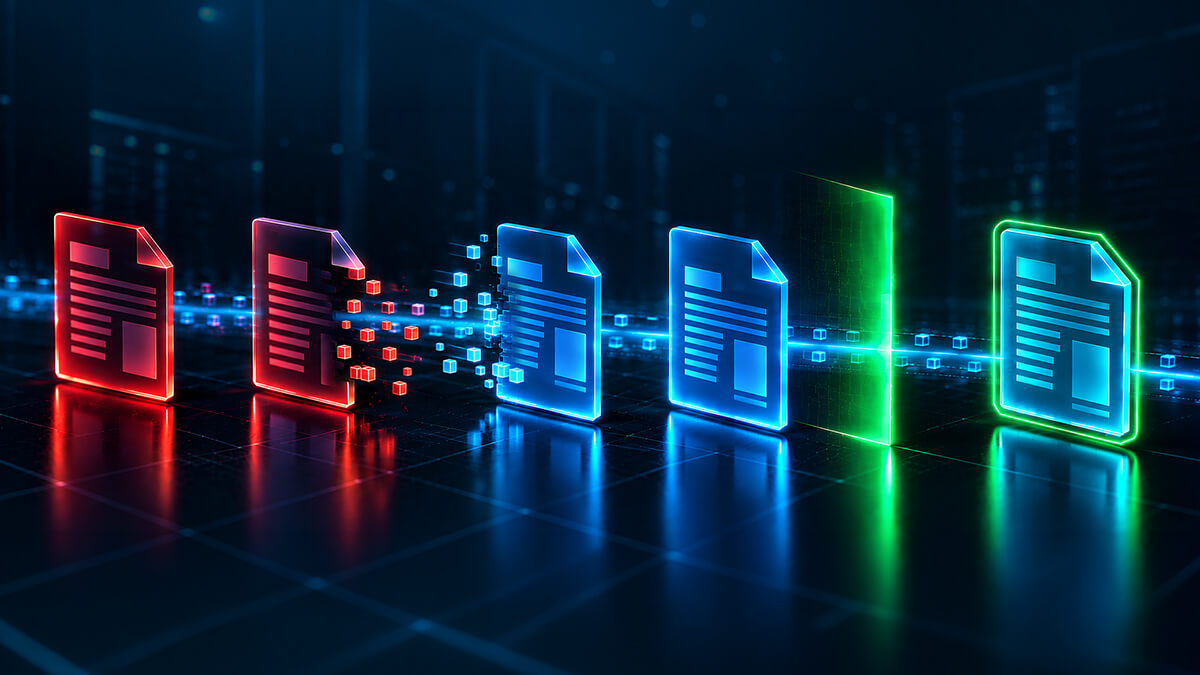
For more than a decade, Glasswall has worked alongside defense and intelligence agencies across the Five Eyes community and other highly secure government environments. At the core of that work is Content Disarm and Reconstruction (CDR), a Zero Trust approach that deconstructs and rebuilds files to remove malware's ability to exist. In high-security environments, traditional sandboxing and detonation chambers introduce significant operational and financial overhead. They require complex infrastructure, consume compute resources, and often cannot operate in fully air-gapped or mission-critical networks where file ingestion must be both secure and immediate.
The evolution of actionable threat intelligence
Powered by proprietary machine learning models, Foresight delivers probabilistic threat scoring when deployed alongside CDR workflows, giving your team structured clarity, control and confidence in file security.
Unlike internet-trained AI models or sandbox-based analysis, Glasswall Foresight derives its intelligence directly from the structural telemetry generated during the CDR process. This gives teams CDR-level threat intelligence while preserving an original file's structure, making it ideal for situations where files must remain unaltered for compliance, legal, or evidentiary reasons. Operating fully offline, it works in air-gapped and DDIL scenarios where traditional antivirus tools struggle and mission safety is critical.
Glasswall Foresight: Redefining how unknown malware is stopped
By assessing files and generating a probabilistic threat score, Foresight reflects the likelihood of malicious behavior, including previously unseen or zero-day threats that evade signature-based and sandbox detection systems.
This score is applied alongside existing CDR policies, giving security teams structured, actionable threat signals and SIEM-ready data on potentially risky files within their environment.
Now available in Glasswall Halo and Meteor
Glasswall Foresight is now available in Glasswall Halo, our scalable server platform deployable on-premises, in the cloud or in air-gapped networks. Previously available exclusively in Glasswall Meteor (our desktop application), Foresight can now be integrated into enterprise-scale file processing workflows and server-side pipelines, bringing predictive AI threat intelligence to a much wider range of deployment scenarios.
Whether you're routing files through Halo as part of a Cross Domain Solution, a file upload portal, or an M365 integration, Foresight's probabilistic threat scoring is now part of that workflow.
What Glasswall Foresight makes possible
- Detects what others miss: Identifies unknown and zero-day threats beyond the reach of antivirus and sandboxing tools.
- Reduces alert fatigue: High accuracy and extremely low false positive rates (0.015% for PDFs) reduce false alarms and investigation time, while providing rapid, actionable threat signals to security teams.
- Preserves file integrity: Provides protection without altering original file structure, ideal for compliance, legal, or evidentiary reasons.
- Deploys anywhere, even offline: Works in the cloud, on premises, or air-gapped and DDIL environments via CLI, Docker, Python or C++.
- Provides cost savings: Helps reduce reliance on multiple antivirus filters and expensive detonation chambers.
- No updates or patches required: Foresight doesn't rely on signature databases or threat feeds, so there's no ongoing patching cycle. Models may occasionally be retrained as the threat landscape evolves, but day-to-day operations require no maintenance overhead.
- Blocks malicious files before employees ever see them: When deployed in Halo, Foresight's threat score can trigger automatic file blocking, ensuring staff never interact with a file assessed as likely malicious.
How Glasswall Foresight works
When a file is processed through Glasswall Halo or Glasswall Meteor, Foresight performs a sequence of intelligent assessments:
- Deep file analysis: Using machine learning and CDR-based inspection, Foresight analyzes the internal structure and embedded characteristics of a file to produce a probabilistic threat score indicating the likelihood of malicious intent.
- Policy-driven handling: Halo or Meteor applies your configured CDR policies alongside Foresight's risk score, enabling intelligent, policy-driven decisions without introducing detonation delays or additional infrastructure.
Currently, Foresight supports PDF, DOCX, and XLSX file formats.
Key use cases: where Foresight delivers the most value
SOC visibility and detection metrics
Foresight's threat scoring data can be fed directly into your SIEM, giving SOC teams a structured, quantifiable view of the file-based threats entering the organization. Teams can track and report on the volume of suspicious and malicious files being detected and stopped, turning an invisible risk into a measurable, reportable data point. This is especially valuable for demonstrating the ROI of your CDR deployment and for threat hunting.
Multi-AV filter optimization
Running multiple antivirus engines in parallel is a common practice to increase detection coverage, but it compounds alert fatigue. Foresight provides a high-confidence, low false-positive signal that can act as a primary triage layer, enabling organizations to tune their multi-AV policies more precisely, reduce redundant alerts and focus analyst time on what actually matters.
When files must remain unchanged
Some workflows require files to be passed through security inspection without any modification. Digitally signed documents, legally admissible records and files subject to strict chain-of-custody requirements must arrive intact. Foresight's structural analysis approach assesses maliciousness without touching the file, meaning the original remains unaltered, signatures remain valid, and compliance requirements are met.
Zero maintenance overhead
Traditional antivirus and threat intelligence tools require continuous signature updates and patch cycles to remain effective. Foresight has no such dependency. Because it reasons from file structure rather than known malware signatures, it remains effective against novel threats without requiring updates. In rare cases where retraining is beneficial, for instance to account for structural shifts in new document formats, that process is managed by Glasswall, not the end user.
Preventing employee interaction with suspicious files
When a file's threat score crosses your configured threshold in Glasswall Halo, the file can be automatically blocked from reaching the end user entirely. For environments handling sensitive data, classified networks, or high-value targets, this means employees never have the opportunity to open, forward, or act on a file that Foresight has assessed as likely malicious, eliminating the human error vector before it can be exploited.
What this means for you
Powered by AI and built on Glasswall's proven CDR technology, Foresight delivers predictive, file-native intelligence that helps security teams identify and prioritize file-based threats earlier in the attack lifecycle. It enables your organization to move from reacting to attacks toward anticipating and managing risk proactively. By integrating predictive intelligence with CDR, now across both Halo and Meteor, Foresight supports early identification of sophisticated threats and helps teams strengthen their file security posture at scale.
Explore Glasswall Foresight and see how predictive threat intelligence fits your file security workflows.