File Security That Holds When the Network Doesn't: CDR at the Tactical Edge
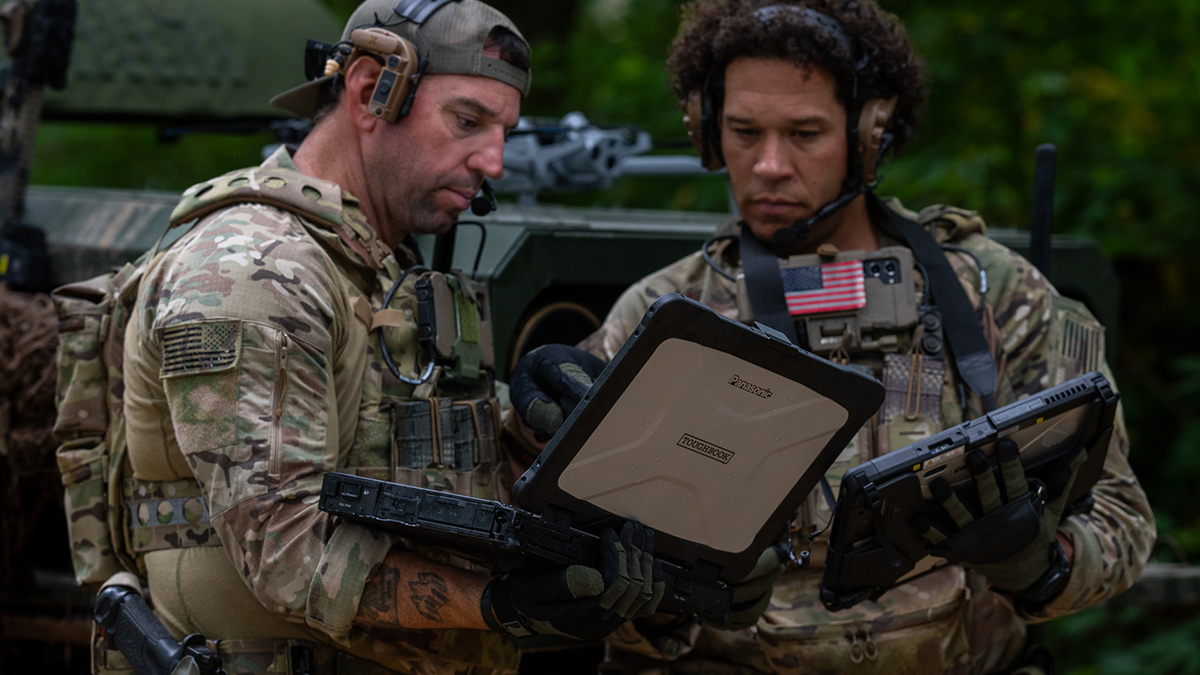
Operators who work in contested electromagnetic environments do not need DDIL defined for them. They have planned around jammed SATCOM, watched MANET links partition under load, and rationed bandwidth down to text when the pipe collapsed. The networking community has answered that with mature doctrine: resilient, multi-path transport that keeps data moving when links degrade. Glasswall does not work at that layer. We work one layer up, on the files that cross it.
A file does not care how it arrived. A degraded SATCOM hop, a MANET relay, or a thumb drive carried between enclaves all end the same way: the moment the file lands, it either rebuilds to a known-good state or it does not. The tooling most forces rely on to make that call quietly fails under the same conditions that degrade the network.
The detection model breaks where DDIL begins
Conventional file security is connectivity-dependent by design. Signature-based AV needs definition updates. Sandbox detonation needs infrastructure to execute in. Reputation and threat-intelligence lookups need a live query path to the cloud. Sever those dependencies, whether by an air-gapped enclave, EMCON, or a tactical node running disconnected for days, and protection degrades on a clock. The security posture is weakest exactly when the threat environment is most contested. That is the opposite of what the mission needs.
Consider a logistics spreadsheet that carries a malicious macro into a shipboard network operating under EMCON. There is no cloud backstop to catch it and no live lookup to clear it. It can sit dormant and propagate laterally until the ship regains connectivity, which may be days later. Forward nodes and cross-domain transfer points face the same problem. They cannot halt operations waiting for a lookup. Detection-based security assumes reachback the environment does not provide.
Content Disarm and Reconstruction: trust through reconstruction, not inspection
The model that holds up under these constraints abandons detection. Rather than inspecting a file and probabilistically labeling it malicious or benign, which is a reactive bet that loses to novel and zero-day payloads, Content Disarm and Reconstruction (CDR) treats every document and image as untrusted by default. CDR covers common document and image formats, including Office documents, PDFs, and common image types. It does not process executables.
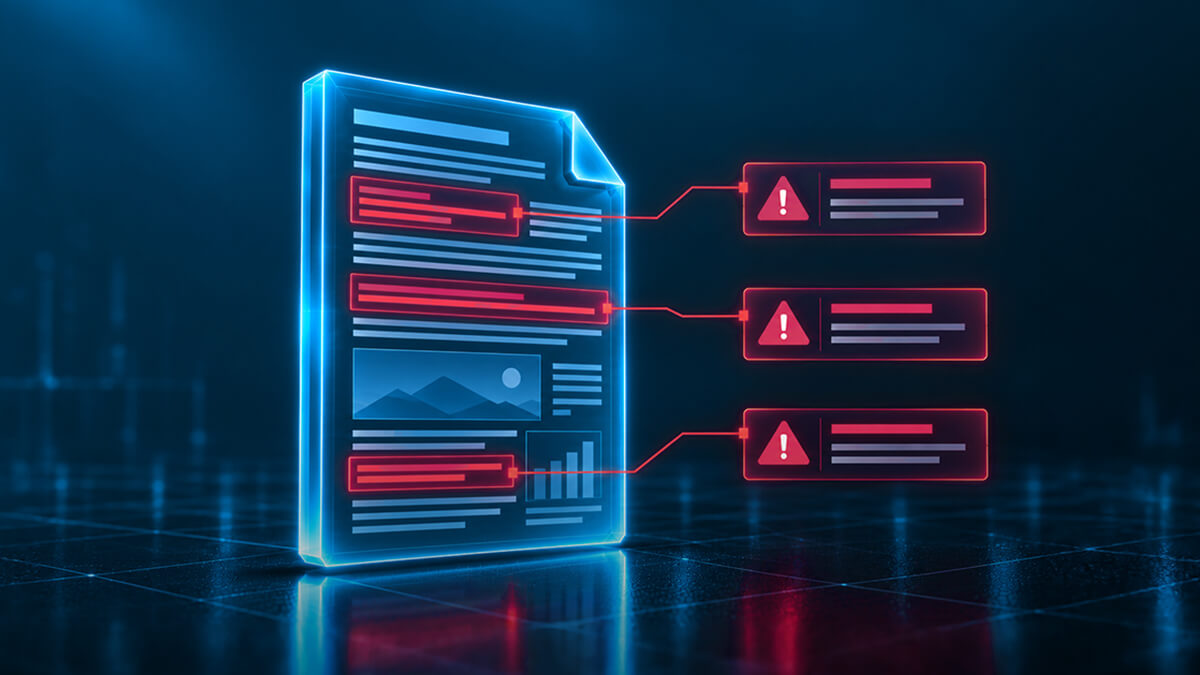
The process has four steps. CDR decomposes the file into its constituent structures. It validates each component against the published file-format specification for that type, for example ISO 32000 for PDF or ECMA-376 for Office documents. It discards anything non-conformant: active content, malformed structures, and content hidden via steganography. It then rebuilds a clean file that conforms to the file-type specification and retains the document's usable content.
The property that matters for DDIL is that this is deterministic and network-independent. There are no signatures to update, no detonation infrastructure, and no reachback. The assurance an operator has on day one of an isolated deployment is identical on day 1,000, with zero connectivity in between. Because CDR rebuilds files to conform to the format specification rather than matching known-bad indicators, it removes non-conformant and active content regardless of whether the threat has been seen before. That is the failure mode that defeats signature-based tools at the edge.
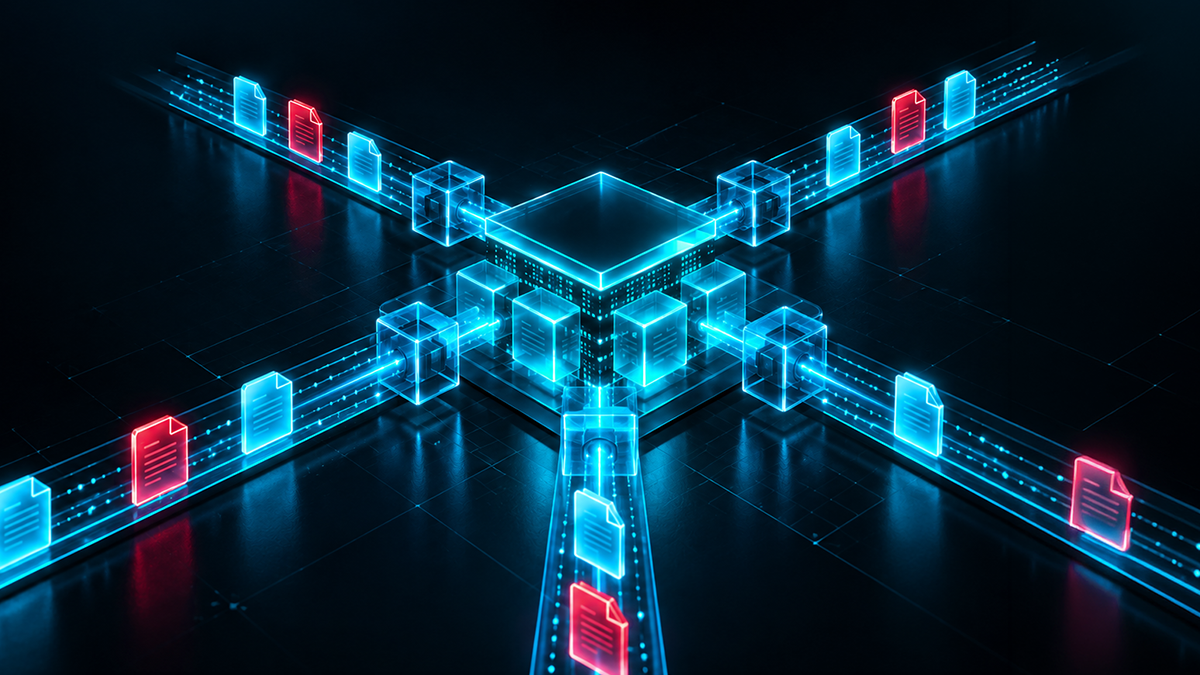
This maps onto the architectures DDIL operators already run. Glasswall's Embedded Engine (SDK) integrates CDR into applications and services at the edge. Glasswall Halo (RESTFUL API) deploys on-premises, in the cloud, or inside fully air-gapped networks. Glasswall Meteor automates sanitization on Windows endpoints. All of them process at the file level, indifferent to the network's state, so CDR fits at cross-domain boundaries, file upload portals, and disconnected enclaves.
Assurance posture
For environments where files cross classification boundaries, the validation matters as much as the capability. Glasswall's CDR is a top-rated malware content filter assessed by NSA's NCDSMO, and it has been deployed across intelligence community agencies for more than seven years. Content filtering at the boundary is a Raise the Bar requirement for cross-domain solutions. CDR is a content-filtering approach that serves in that role. The platform supports automated DISA STIG hardening via RKE2 and implements NIST SP 800-171 controls. Glasswall holds CMMC Level 2 certification, awarded in March 2026.
Bottom line
Resilient transport and trustworthy data are two halves of one requirement. DDIL readiness means engineering both, and engineering the security half to hold up under denial rather than degrade with it. A mesh that faithfully delivers a weaponized document has not improved survivability. A clean file that never arrives has not served the mission. Detection-based tooling degrades with the network. Reconstruction-based file security does not.
Glasswall provides network-independent, file-based threat prevention for disconnected and mission-critical environments. To discuss CDR for DDIL and cross-domain deployments, contact the team or request a demo.
Kelly Davis
Kelly Davis, our Senior Solutions Architect, brings deep expertise in DevOps, IT architecture, and Zero Trust security. Previously he was a Lead IT Specialist at the Command Control and Communication Tactical Directorate Communications Networks Division in the DoD, delivering secure, scalable solutions in high-stakes environments. At Glasswall, he applies this experience to drive innovation and resilience in our cybersecurity solutions.
See what Zero Trust file protection looks like. Live, in 25 minutes.
A tailored walkthrough of how Glasswall rebuilds files to a known-good state, removes hidden threats, and provides the intelligence you need to understand file risk.
What's in the demo
See malicious files rebuilt in real time Watch Glasswall remove hidden threats and return a safe, usable files.
Integrate security without disruption See how Glasswall fits into your existing workflows and infrastructure.
Gain complete visibility into file risk Uncover threats, anomalies and hidden file intelligence.
“
Beazley's security is paramount, and this integration has significantly reinforced our cybersecurity framework.
Thank you! Your submission has been received!
Oops! Something went wrong while submitting the form.


.png)