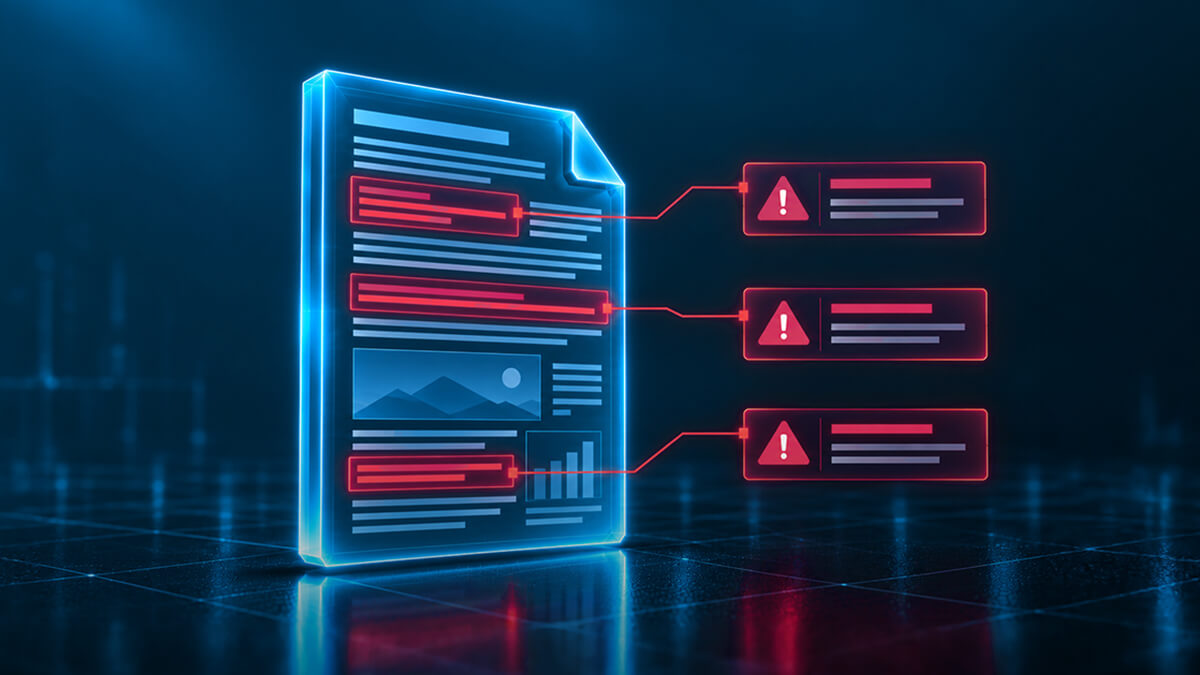
What is data-centric security and why is it key to modern cyber protection?
Your data will be compromised. The only real question is when.
Organizations can no longer rely on perimeter-based security to protect their most valuable asset: data. As information moves across cloud platforms, users and services, the ability to control and secure data itself has become the defining factor in effective cyber protection.
This shift is playing out in real-world environments. Modern organizations operate across technology environments that are far more distributed than before. Hybrid work, interconnected digital services and increasingly complex IT ecosystems mean data now crosses multiple trust boundaries before reaching its destination.
As this trend accelerates, the security measures that once relied on traditional network controls provide less protection than many assume. You can no longer rely on a firewall to stop attackers if they can access data through stolen credentials, misconfigured storage or weak controls governing how information is shared.
To address these challenges, the concept of data-centric security has emerged. Instead of focusing on the infrastructure that surrounds information, it prioritizes safeguards that apply directly to the data itself, regardless of where it travels or who attempts to use it. The objective is to ensure data stays protected even when traditional security layers fail or infrastructure sits outside your direct control. In practice, a data-centric security model protects information at rest, in transit and in use, regardless of where it resides.
What data-centric security means in practice
Data-centric security prioritizes protecting the data itself rather than relying on the systems that host or transport it. This means applying controls that remain effective even as data moves between applications, locations or users.
In practice, a data-centric approach means:
Protecting data even when it leaves your network
Controlling access based on identity rather than location
Applying consistent policies as data moves between systems
Reducing reliance on infrastructure behaving perfectly
Encryption ensures that information cannot be read without the appropriate permissions, while strong identity and access controls limit who can access sensitive material. Classification policies guide how data should be handled throughout its lifecycle, and monitoring tools provide visibility into how information is being accessed or shared. Collectively, these measures focus protection on the asset that matters most, reducing security's dependence on the reliability of surrounding infrastructure.
This approach aligns closely with guidance from organizations such as the National Institute of Standards and Technology (NIST), which emphasizes protecting resources through identity, policy enforcement and continuous verification rather than relying solely on network boundaries.
Why reactive, perimeter-focused approaches fall short
A major blind spot for many organizations is a continued reliance on security measures that try to contain threats at a defined boundary. This model assumes attackers will try to break in from the outside. In reality, they often just log in. The approach works less effectively as infrastructure becomes more distributed and as data moves between users, applications and external services. Attackers can bypass traditional perimeter controls by using compromised credentials or by exploiting weaknesses in systems that sit outside the direct oversight of security teams.
A further challenge is the perennial problem posed by zero-day malware. Traditional antivirus tools depend on known signatures and behavioral indicators, meaning they may not detect new or modified threats. Sandboxing provides another layer of defense, but it can be evaded through delayed activation or techniques designed to avoid analysis. This leaves you reacting to threats after they have already entered the environment.
Insider activity and configuration errors also contribute. In many cases, data exposure occurs not through deliberate misuse but through incorrect settings or inconsistent policy application. As environments expand, these mistakes become harder to spot and easier to exploit.
As a result, many organizations face the same recurring issues:
Threats bypass perimeter controls entirely
New or modified malware evades detection
Data exposure occurs through misconfiguration rather than intrusion
Security teams lose visibility as environments grow
Core components of a data-centric security strategy
A data-centric approach depends on strong identity and access governance. At its core are technologies and processes that ensure only verified users and devices can access sensitive information. This limits the damage credential theft can cause and reduces the risk of unauthorized access.
Policy-based control is also critical. By setting rules for how information should be handled in different contexts, organizations can apply consistent safeguards as data moves between systems or is shared with external parties. These policies guide storage, transfer and use to help prevent accidental exposure.
Continuous visibility adds another layer of assurance. As organizations store more sensitive information across cloud platforms, many also use Data Security Posture Management (DSPM) solutions to discover, classify and monitor sensitive data at scale. Monitoring how data is accessed or modified provides early warning of unusual behavior and supports investigations if an issue arises. This level of insight becomes essential as cloud platforms and distributed applications increase the number of potential access points.
And crucially, proactive threat removal reduces reliance on reactive detection tools. Ensuring files are safe before they enter your environment removes opportunities for attackers to exploit hidden threats or structural weaknesses. This strengthens overall resilience and complements other elements of a data-centric strategy.
Data-centric security in cloud environments
Cloud adoption creates new pressure on data-centric security strategies. When information moves between on-premises systems, cloud storage and third-party services, the number of access points multiplies and the perimeter becomes effectively meaningless. Security controls that only apply within a managed network boundary stop working the moment data crosses into a cloud environment outside direct organizational control.
A data-centric approach addresses this directly, because protections travel with the data rather than sitting at the edge of a defined network. Encryption ensures information remains unreadable without the correct permissions, while Identity and Access Management (IAM) controls determine who can access sensitive data. Data Loss Prevention (DLP) policies and Information Rights Management (IRM) help govern how information is classified, shared and protected throughout its lifecycle.
For organizations migrating workloads to the cloud, this consistency matters. The risk is not just that cloud environments introduce new attack surfaces, though they do. It is that data passes through systems your team does not fully control, making file integrity a genuine concern. Files transferring between environments during cloud migration can carry hidden threats that go undetected by signature-based tools, and those threats persist in the destination environment after migration completes.
This is why proactive file protection becomes especially important in cloud contexts. Validating and cleaning files before they reach cloud storage, not after, removes the window of exposure that detection-based approaches leave open.
The UK's National Cyber Security Centre (NCSC) also advises organizations to apply consistent security controls across cloud services using a shared responsibility model, rather than assuming cloud providers alone are responsible for protecting data.
How data-centric security strengthens a Zero Trust approach
For government and private sector organizations operating under a Zero Trust approach to security, a data-centric model supports this by ensuring that protection applies directly to the information being accessed. When controls follow the data, verification becomes more consistent and less dependent on network boundaries. This reflects the principles outlined in NIST's Zero Trust Architecture, where trust is continuously evaluated based on identity, device posture, and context rather than network location.
This has a direct impact on how organizations limit movement within their environments. If access to data is tightly governed, attackers hit dead ends sooner. They may gain access to an endpoint or system, but their ability to reach sensitive information is far more limited.
Data-centric security also supports Zero Trust by maintaining protection across different locations. As information moves between cloud platforms, remote users or external services, the same rules and safeguards apply. This reduces the risk that data will be exposed when it leaves a controlled network or passes through infrastructure not managed by the organization.
File-based threats and the role of CDR in a data-centric strategy
In many data-centric strategies, file-based threats remain a significant gap. Attackers frequently use common document formats to deliver hidden malware or exploit structural vulnerabilities that are difficult to detect through traditional tools. These issues can arise even in well-governed environments, as files often originate from external sources or pass through systems that fall outside direct organizational control. Treating every file as untrusted is essential for reducing this risk.
Glasswall's Content Disarm and Reconstruction (CDR) technology addresses this by validating and rebuilding files to a known-good standard. Rather than attempting to identify malicious content, the process focuses on ensuring that each file conforms to its manufacturer's specification. Any deviations are removed, and the resulting file is delivered in a clean, fully functional state. This shifts protection from detection to prevention.
Transferring files between environments with different trust levels
Inspecting uploads before they reach internal systems
Processing large volumes of data during cloud migration
Protecting isolated or air-gapped networks without relying on signatures
By adopting a data-centric security model that protects information at rest, in transit and in use, organizations can maintain stronger oversight, reduce exposure and limit opportunities for attackers.
The data-centric security imperative
For organizations everywhere, a shift toward data-centric security reflects the realities of how they now operate. Information moves through a wide range of environments, and traditional perimeter measures offer limited protection when threats can emerge from many different points. Attackers target data, not infrastructure.
By focusing on controls that apply directly to the data, organizations can maintain stronger oversight and reduce the opportunities available to attackers.
See how Glasswall CDR enforces Zero Trust at the file level. Book a demo.
Frequently asked questions
What is data-centric security?
Data-centric security is an approach that applies security controls directly to the data itself, rather than relying on the network or infrastructure around it. This means protecting information through encryption, identity-based access controls and classification policies that follow the data wherever it goes, whether it sits on-premises, in the cloud or in transit between systems.
What is the difference between data-centric and perimeter security?
Perimeter security focuses on defending a defined network boundary, typically through firewalls and network controls. Data-centric security focuses on the information itself. As organizations adopt cloud platforms and hybrid work patterns, perimeter models become less effective because data routinely moves outside the boundary they protect. Data-centric controls apply regardless of location.
How does data-centric security work in cloud environments?
In cloud environments, data-centric security applies controls that follow information across cloud storage, third-party services and on-premises systems. Encryption keeps data readable only to authorized parties. Identity-based access governance continues to apply regardless of where files reside. And file validation before data enters cloud storage closes the gap that signature-based detection leaves open.
How does Content Disarm and Reconstruction (CDR) support a data-centric security strategy?
CDR removes the assumption that files can be trusted by default. Glasswall CDR validates every file against its manufacturer's specification, removes anything that deviates and delivers a clean, fully functional version. This makes file-based threats a non-issue for environments that treat all incoming files as untrusted, and it complements identity and access controls by ensuring the files themselves cannot carry hidden threats.
Jake Bussell
Glasswall’s Marketing Director, Jake, brings more than a decade of expertise in file-based threats, Content Disarm and Reconstruction (CDR), and the security challenges facing government and enterprise organizations. He focuses on turning complex cybersecurity issues into practical insights that help organizations understand and reduce risk at the file level.
See what Zero Trust file protection looks like. Live, in 25 minutes.
A tailored walkthrough of how Glasswall rebuilds files to a known-good state, removes hidden threats, and provides the intelligence you need to understand file risk.
What's in the demo
See malicious files rebuilt in real time Watch Glasswall remove hidden threats and return a safe, usable files.
Integrate security without disruption See how Glasswall fits into your existing workflows and infrastructure.
Gain complete visibility into file risk Uncover threats, anomalies and hidden file intelligence.
“
Beazley's security is paramount, and this integration has significantly reinforced our cybersecurity framework.
Thank you! Your submission has been received!
Oops! Something went wrong while submitting the form.


.png)