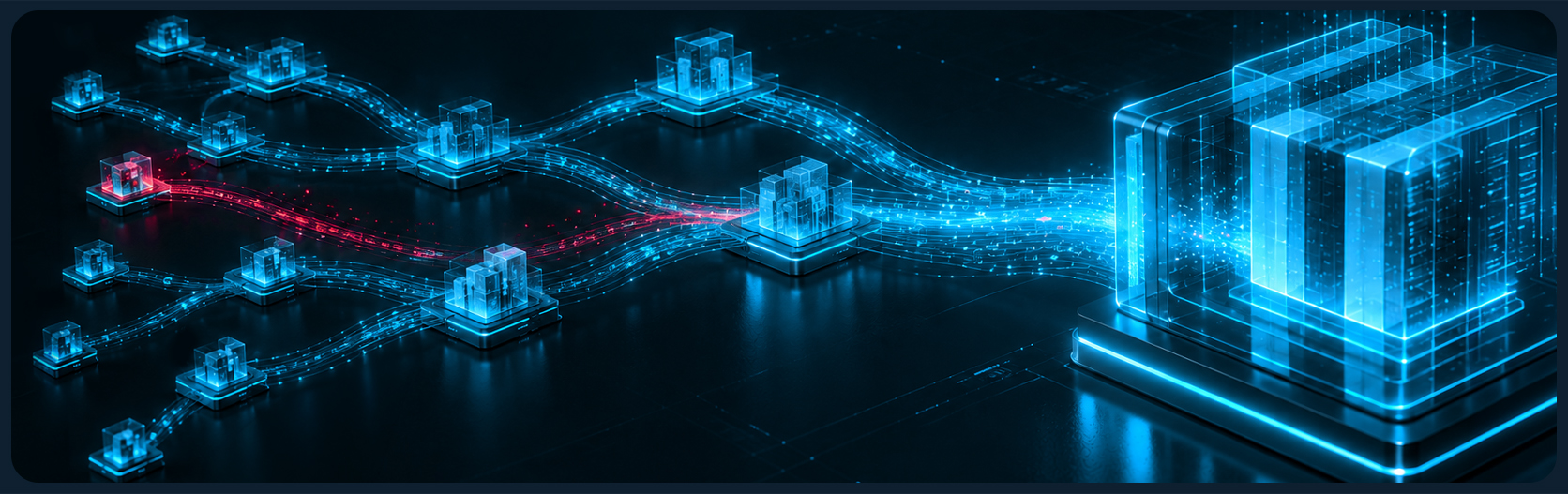
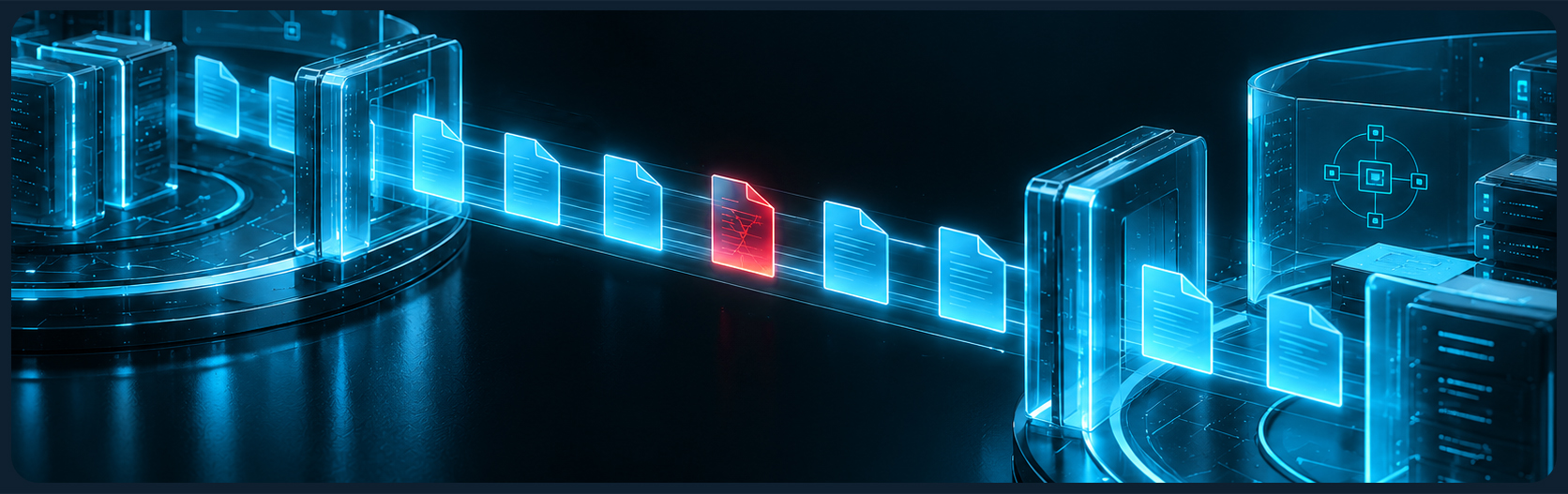
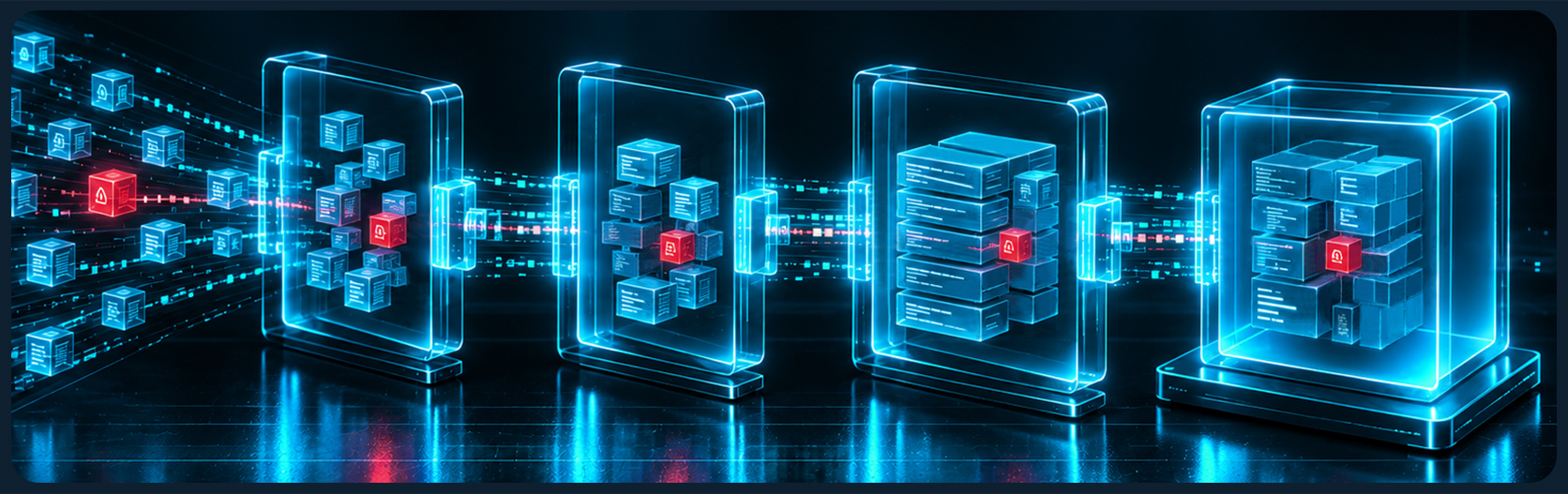
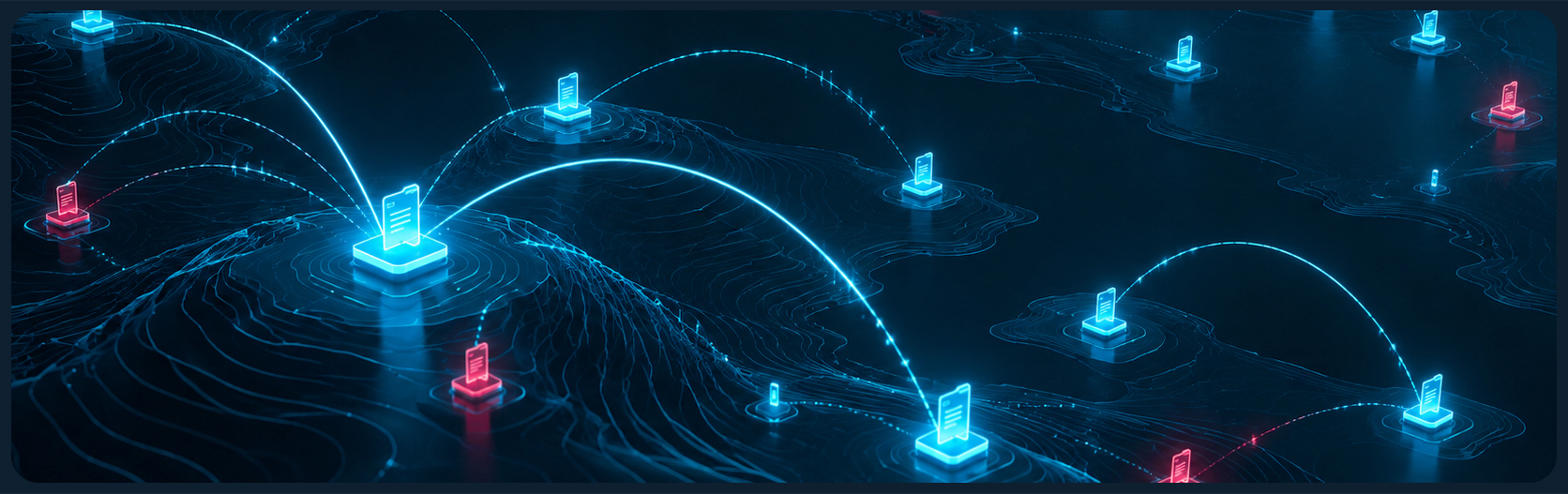
Five places your files are most trusted, and most dangerous
A file lands in a program office inbox from a long-trusted prime contractor. Another passes through a cross domain solution, cleared and approved. A third reaches an operator over a tactical data link with no connection back to headquarters.
In every case, the pathway did its job. The sender was authorized. The channel was approved. The file arrived exactly as expected.
And that is precisely what makes these pathways attractive routes for file-borne attacks.
Across DoD environments, five operational pathways create particularly significant exposure. Each shares the same structural weakness: the controls protecting the pathway were designed to answer "Is this sender authorized?" or "Is this transfer permitted?", not "Is the content inside this file safe?"
Understanding where that gap exists is the first step toward closing it.
1. Coalition and partner file exchange
Multinational operations depend on a constant flow of intelligence, surveillance and reconnaissance (ISR) products, operational orders, intelligence and logistics data between U.S. and partner networks.
Five Eyes (FVEY) and NATO partners operate their own security architectures and controls, which will not always be identical to those protecting U.S. systems. An adversary that compromises a partner environment may not need to penetrate a U.S. network directly. It can instead exploit the trusted exchange relationship already connecting the two.
And as operational tempo increases, particularly in theaters such as INDOPACOM and EUCOM, so does the volume of files crossing those boundaries and the potential attack surface.
2. Contractor and supply chain document ingest
Every acquisition program runs on files: proposals, engineering drawings, test reports, technical documentation, software packages and firmware arriving continuously from primes, subcontractors and vendors.
Each is effectively a semi-trusted object arriving from an organization whose security posture the program office does not fully control.
Compromise a second- or third-tier supplier and an otherwise routine document exchange can become a delivery mechanism for malicious content, using established business processes and trusted relationships to reach the target.
3. Cross domain solution (CDS) transfer
A CDS exists to control what moves between security domains and classification levels. That makes it one of the most trusted transfer mechanisms in the architecture, and therefore one of the most consequential places for malicious content to succeed.
Once a file passes through the cross domain boundary, it may gain access to a higher-classification or otherwise more sensitive environment through an explicitly approved pathway.
Many transfer policies rely heavily on validating file type and format: is this an allowed file, and does it appear to match the expected structure?
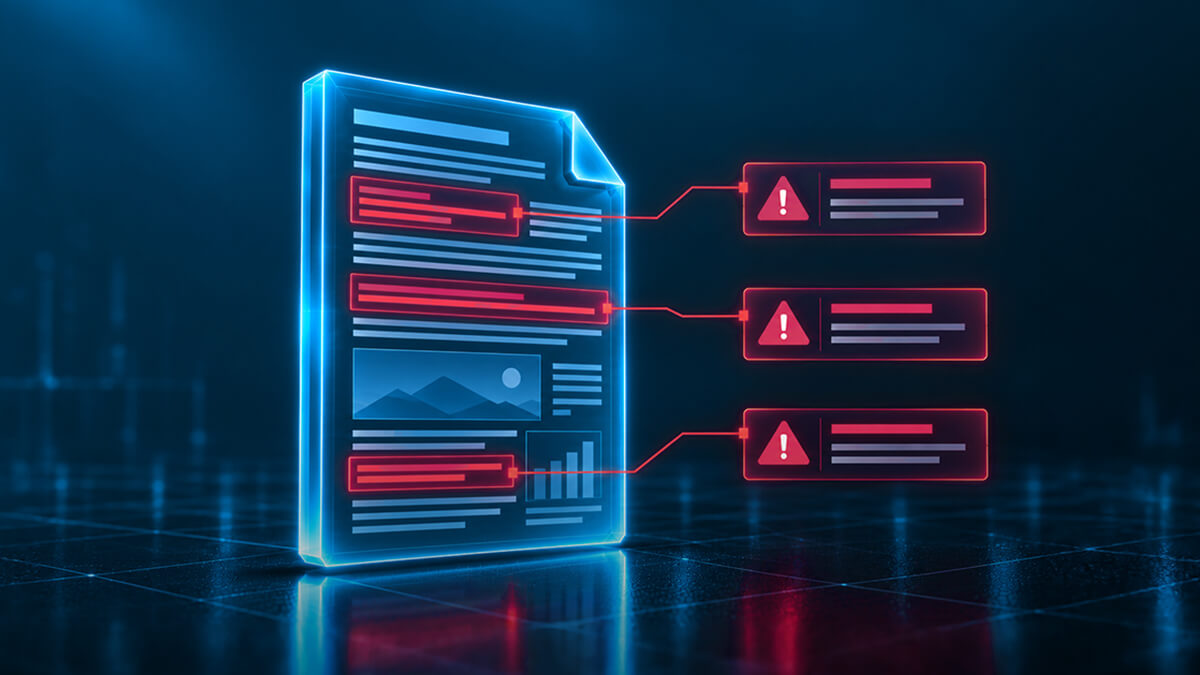
But a file can look legitimate at one level while containing additional, malformed or unexpected content underneath. Polyglot and structurally manipulated files are designed specifically to exploit that ambiguity.
The question is therefore not simply whether the file is an approved type, but whether everything inside it conforms to what that file type is actually supposed to contain.
4. DevSecOps and software supply chain pipelines
Platform One and the broader DoD DevSecOps modernization effort have moved software delivery toward hardened, automated, cloud-native pipelines.
Those pipelines continuously ingest artifacts: container images, software packages, dependencies, configuration files, templates, test data and other machine-consumed content.
A malicious or malformed artifact introduced into that flow may not need to compromise a developer identity or defeat repository access controls. It can exploit the trust placed in the artifact itself.
SolarWinds demonstrated the potential impact of software supply chain compromise at scale. Within the defense industrial base, the environment is arguably not less exposed, just more strategically targeted.
5. Tactical edge and DDIL environments
Forward-deployed, disconnected, intermittent and limited-bandwidth environments, characterized by denied, degraded, intermittent or limited (DDIL) conditions, face a compounded version of the same problem.
Files can arrive through coalition exchanges, tactical data links, removable media, satellite communications and other mission pathways, often where connectivity to cloud-based analysis, reputation services or continuously updated threat intelligence is intermittent or unavailable.
Security controls that depend on external connectivity can therefore become least effective precisely when operational dependence on incoming data is highest.
At the tactical edge, file security needs to work locally, deterministically and without assuming access to the cloud.
The pattern underneath all five
Across every pathway, the pattern is the same: the file arrives through a channel doing exactly what it was designed to do.
The sender was authenticated. The transfer was authorized. The classification boundary was enforced. The pipeline was access-controlled.
But none of those controls necessarily determine whether the content inside the file is safe.
Access controls answer: "Should this entity be allowed to reach this resource?"
File security requires answering a different question: "Is this resource safe to use?"
Treating those as the same problem leaves a gap adversaries can exploit.
Closing the gap without replacing what already works
This is where Content Disarm and Reconstruction (CDR) fits. Glasswall's CDR technology addresses the content-safety question that access controls were never designed to answer.
CDR does not replace identity, access control, CDS policy, endpoint security or existing malware defenses. It addresses a different layer of the problem: the structure and content of the file itself.
Rather than relying solely on identifying known malicious behavior, Glasswall CDR disassembles a file into its constituent elements, validates those elements against the specification for the file format, and reconstructs a clean, conformant version, excluding content that should not be there.
That same approach can operate at a coalition exchange boundary, within a cross domain workflow, at a DevSecOps ingest point or at the tactical edge, including environments where no network connection is available.
The pathways themselves are not going away.
Coalition partnerships, contractor relationships, cross domain transfer, software pipelines and tactical information exchange are fundamental to how the DoD operates.
The question is not whether files will continue moving through them. It is whether the content inside those files is verified before it reaches the mission.
Talk to an expert about closing the file-content gap across CDS, DevSecOps and tactical edge environments using the form below.
Sam Hutton
A co-founding executive with more than 20 years’ experience in the technology sector, he currently serves as Chief Growth Officer at Glasswall, a role he has held for over three years. Prior to this, he spent nearly seven years as Senior Vice President, building and scaling the company’s North American business. As CGO, he has driven sustained revenue growth by leading and developing high-performing sales organizations, fostering cross-functional collaboration and executing innovative go-to-market strategies.
See what Zero Trust file protection looks like. Live, in 25 minutes.
A tailored walkthrough of how Glasswall rebuilds files to a known-good state, removes hidden threats, and provides the intelligence you need to understand file risk.
What's in the demo
See malicious files rebuilt in real time Watch Glasswall remove hidden threats and return a safe, usable files.
Integrate security without disruption See how Glasswall fits into your existing workflows and infrastructure.
Gain complete visibility into file risk Uncover threats, anomalies and hidden file intelligence.
“
Beazley's security is paramount, and this integration has significantly reinforced our cybersecurity framework.
Thank you! Your submission has been received!
Oops! Something went wrong while submitting the form.