Cross Domain Solutions (CDS) are designed to enable the safe movement of data between environments operating at different trust levels. They play a critical role in government, defense, and regulated sectors, where a single unsafe file crossing a boundary can compromise mission systems or sensitive networks.
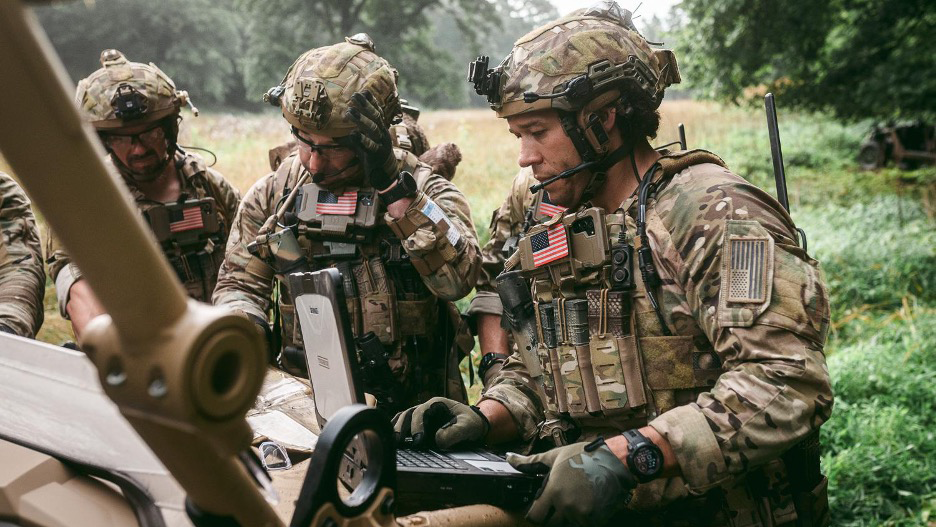
In tactical and forward-deployed environments operating under DDIL (Denied, Disrupted, Intermittent, Limited bandwidth) conditions, files must be handled safely regardless of connectivity status. For security leaders, the challenge is not simply enforcing separation between domains; it’s ensuring that every file entering or leaving a system can be trusted, regardless of its source, format, or delivery mechanism.
Why CDS environments are exposed at the tactical edge
Central to the security challenge is that in cross domain environments, files remain one of the most effective attack vectors. Documents such as PDFs and Office files routinely cross trust boundaries and, as a result, are also the formats most commonly abused by threat actors.
At the tactical edge, file risk is amplified by operational realities. For example, removable media is widely used to move data between systems and coalition partners. Analysts process files originating from multiple security environments, often without access to enterprise security services. In many cases, these activities take place on individual workstations operating independently of centralized infrastructure.
This creates a narrow margin for error. Any malicious or malformed file that bypasses controls can propagate across trust boundaries, undermining the very purpose of a CDS.
Where traditional file security approaches fall short
Today, many CDS workflows still rely on detection-based security technologies to assess file safety. These approaches are poorly suited to tactical and disconnected environments.
More specifically, signature-based tools rely on frequent updates, which are unavailable under denied or degraded conditions. Sandbox analysis can be bypassed by delayed or dormant payloads, and often requires connectivity or centralized processing. Machine learning approaches rely on patterns of known behavior and cannot provide assurance against novel or zero-day exploits embedded within otherwise legitimate file structures.
Some file sanitization methods attempt to mitigate risk by converting documents into static formats, stripping functionality and degrading operational value while still failing to address deeper structural flaws.
In tactical CDS scenarios, these limitations create an unacceptable tradeoff between security and mission continuity. The fundamental issue is that detection-based security asks ‘is this file bad?’ In contrast, prevention-based security asks ‘is this file right?’ In contested environments where threat intelligence is unavailable and enemy attacks are assumed, only the latter question can be reliably answered.
A Zero Trust file security approach built for the tactical edge
Organizations need file security to function independently of network-based controls and detection-driven technologies. Trust cannot be inferred from context, connectivity, or prior inspection, and every file must be verified on its own merits at the point where it is handled.
Glasswall addresses this requirement by applying Content Disarm and Reconstruction (CDR) directly at the endpoint. Rather than attempting to identify malicious indicators, files are deconstructed, validated against their known manufacturer specifications, and rebuilt into a clean, standardized form before they are used or transferred.
This approach aligns naturally with Zero Trust principles and the requirements set out in the NSA’s Raise the Bar initiative, which emphasises preventing entire classes of file-based threats through architectural controls rather than relying on detection alone.
Files are never assumed to be safe based on source, delivery path, or prior handling. Instead, each file is treated as untrusted until it has been structurally verified and reconstructed into a known-safe form.
In tactical and forward-deployed environments, this capability operates without reliance on cloud connectivity, signature updates, or centralized infrastructure. Glasswall Meteor, a Windows desktop application designed specifically for tactical environments, delivers this capability by running entirely on individual operator workstations. Unlike server-based solutions that require network infrastructure, Meteor enforces file level ZT controls locally wherever files are introduced into operational workflows.
Files placed into monitored locations, such as download directories, removable media mount points, or staging folders used for cross domain transfer, are automatically processed. Files that can be safely reconstructed are delivered in a fully functional form, while those that cannot be validated are isolated to prevent further risk from propagating.
Applying CDR in tactical cross domain workflows with Glasswall Meteor
Glasswall Meteor, an automated file cleaning application for local and cloud storage, complements existing CDS infrastructure rather than replacing it. Files are sanitized before they ever enter a cross domain transfer process, reducing the risk presented to CDS gateways and downstream systems. The same enforcement can then be applied again after transfer, ensuring that files remain trustworthy at the point of use.
This model supports a defense-in-depth approach to CDS operations. Domain separation continues to be enforced by the CDS itself, while file-level trust is independently verified on both sides of the boundary. Because Meteor operates locally, this verification remains available even when connectivity to centralized security services is unavailable.
In practice, this allows tactical units to maintain consistent file security controls across low-side and high-side environments. Files originating from coalition partners, field collection systems, or removable media can be sanitized before submission into cross domain workflows. Files delivered from CDS outputs can be revalidated on receipt, preventing compromised or malformed content from reaching mission systems.
Crucially, this approach removes the need to relax security controls in order to maintain operational tempo. With sub-second processing per file, sanitization occurs automatically in the background without introducing latency into operational workflows. Document functionality is fully preserved while hidden threats are eliminated before they can cross trust boundaries.
Operational assurance in high-assurance CDS environments
Cross domain operations demand more than theoretical security guarantees. Controls must perform reliably under adversarial conditions, at scale, and without introducing operational friction. For CDS operators, confidence in file handling is inseparable from mission assurance.
Glasswall’s CDR technology has been tested, validated, and deployed in high-assurance environments where file-based attacks are explicitly assumed. By reconstructing files according to fixed manufacturer specifications rather than threat intelligence or behavioral analysis, the approach removes both known and unknown threats without relying on detection accuracy.
This model aligns closely with established CDS and Zero Trust guidance. File-level verification supports NSA’s Raise the Bar principles by ensuring that content crossing boundaries is structurally safe and standardized. It also aligns with the Army Unified Network Plan 2.0 requirement for secure data sharing in contested environments, and with the Department of the Navy (DoN) CIO Zero Trust blueprint’s emphasis on protecting data at every enforcement point, while reinforcing Risk Management Framework controls related to malicious code protection without introducing dependencies on connectivity or centralized inspection services.
By combining traditional CDS separation with independent, endpoint-level file verification, organizations can maintain consistent assurance across disconnected, coalition, and forward-deployed environments. The result is a CDS workflow that remains resilient even when operating under denied or degraded conditions.
A particularly relevant application is coalition file exchange. When receiving files from allied forces or partner nations, an organization cannot verify the security posture of the originating systems. CDR enables secure information sharing without requiring trust in the partner's security infrastructure, and files are validated and reconstructed regardless of their source, ensuring that coalition data sharing does not introduce risk to U.S. systems.
By applying CDR directly on operator endpoints, Glasswall Meteor strengthens CDS workflows without altering their core architecture. File-level Zero Trust enforcement before and after cross domain transfer provides consistent assurance in environments where traditional detection-based controls cannot operate reliably.
Learn more about Glasswall Meteor>>